Latest News from our dye house
Socks
Voila! Socks knitted by Polly Van Bremmel using the bluefaced Leicester -Iris, here is what she has to say about the pattern she used and the yarn.
The pattern I used as reference is by Cookie A. called "Monkeys." I say referenced, because I made quite a few modifications: toe up (vs. cuff down), no purls (knitted these sts), no yo's (unique left and right leaning increases so pattern "swirls" better, without any yo holes).
I knitted them with a size 2.25 mm/100 cm circular (for 2 at a time). Also, when I make socks, I make the gusset increases on the bottom of the foot, so the gusset area looks a liittle different than a standard gusset.... moreCookie A Knit-a-long
Renaissance Dyeing is a sponsor for this months Cookie A, Sock Innovation, Knit-a-long (Kal)
For the month of December (2009) We will be offering a 10% discount for anyone in the Ravelry, Sock Innovation Group.
The prize we are offering for the winner of the Kal is NOT a hank of our naturally plant dyed BFL sock wool but a Natural Dyed Sock Kit.
The winner will receive full instructions on how to use it, which is the equivalent of spending a day here in one of my workshops, without the French bit, unfortunately.... moreMadder Compost
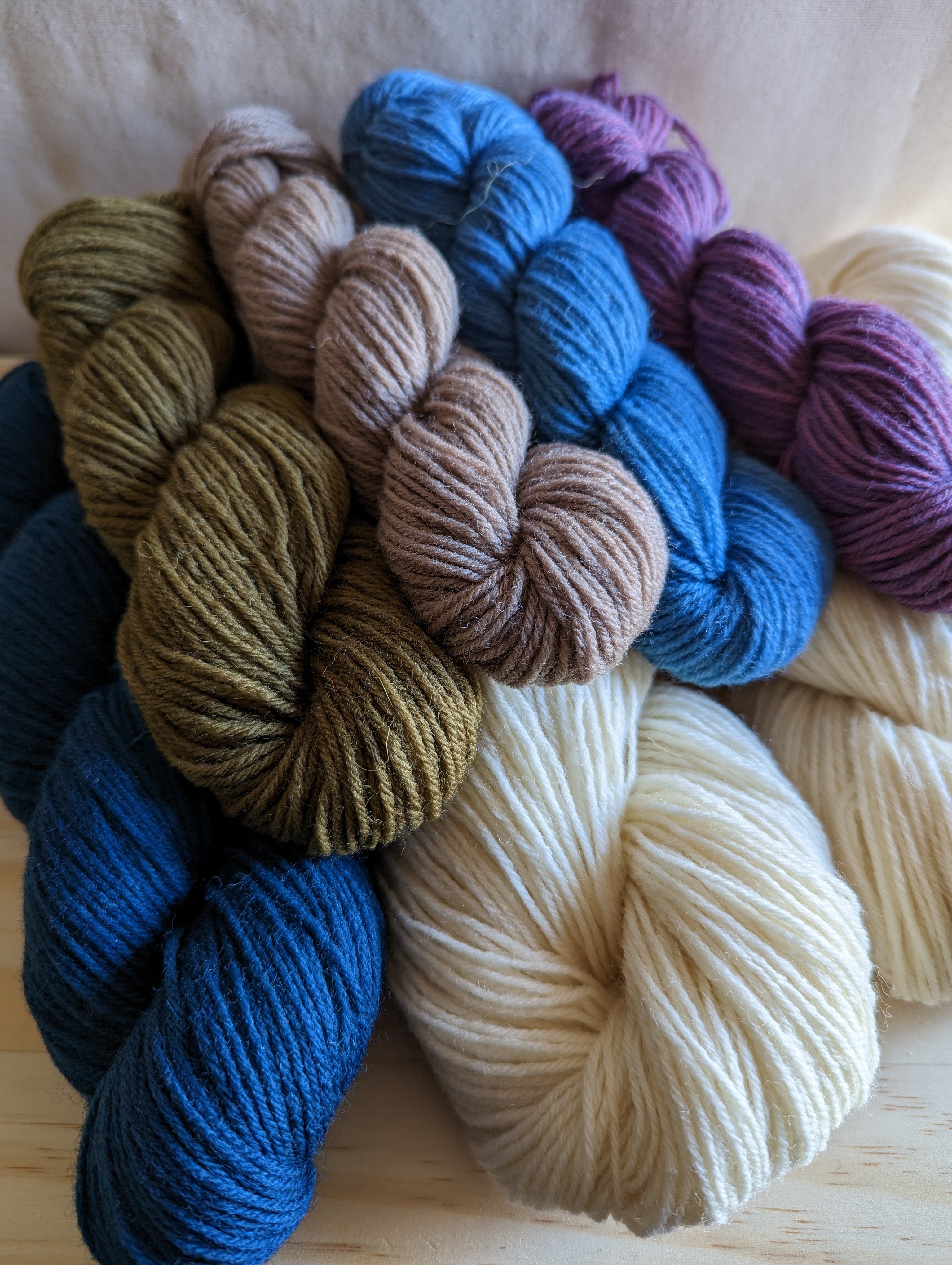
The sock yarn below was dyed not exactly on a compost heap but in buckets of left over dye stuffs that were left in the sun for a few weeks.
It was a continuation of the use of the home-grown madder written about in the previous article Madder and Madder.
The madder in question had already been used to dye over one and a half times it weight, however because the madder was quite coursely chopped I could see both from the wool dyed and the madder that was left over that the red pigments had not yet been fully released from the roots.... moreMadder and Madder
Lots of you have asked how I would process the madder harvested last year.
Well, it has dried very well, hanging in my neighbours' barn and was only brought inside just as the cyclone arrived last January. I wasn't going to risk my madder being blown away! It had dried so well that it was possible to snap it into smaller pieces, but not small enough.
I have saved this home grown madder for this Autumn's sock collection not only because I have heard that madder needs to mature for a year but also I thought that Jan Kees deserves a pair of madder dyed handed knitted socks after all the hard digging and washing he did last year.... moreCochineal Exhausts
The Exhausting Pursuit of Pale Pink
Exhaust is the name given in dyeing to the leftover dye baths. So once you have dyed a batch of wool what you have left over in the vat is called first exhaust. Once you have dyed something in this you have the 2nd exhaust left.
With this in mind I set out to dye pale pink!
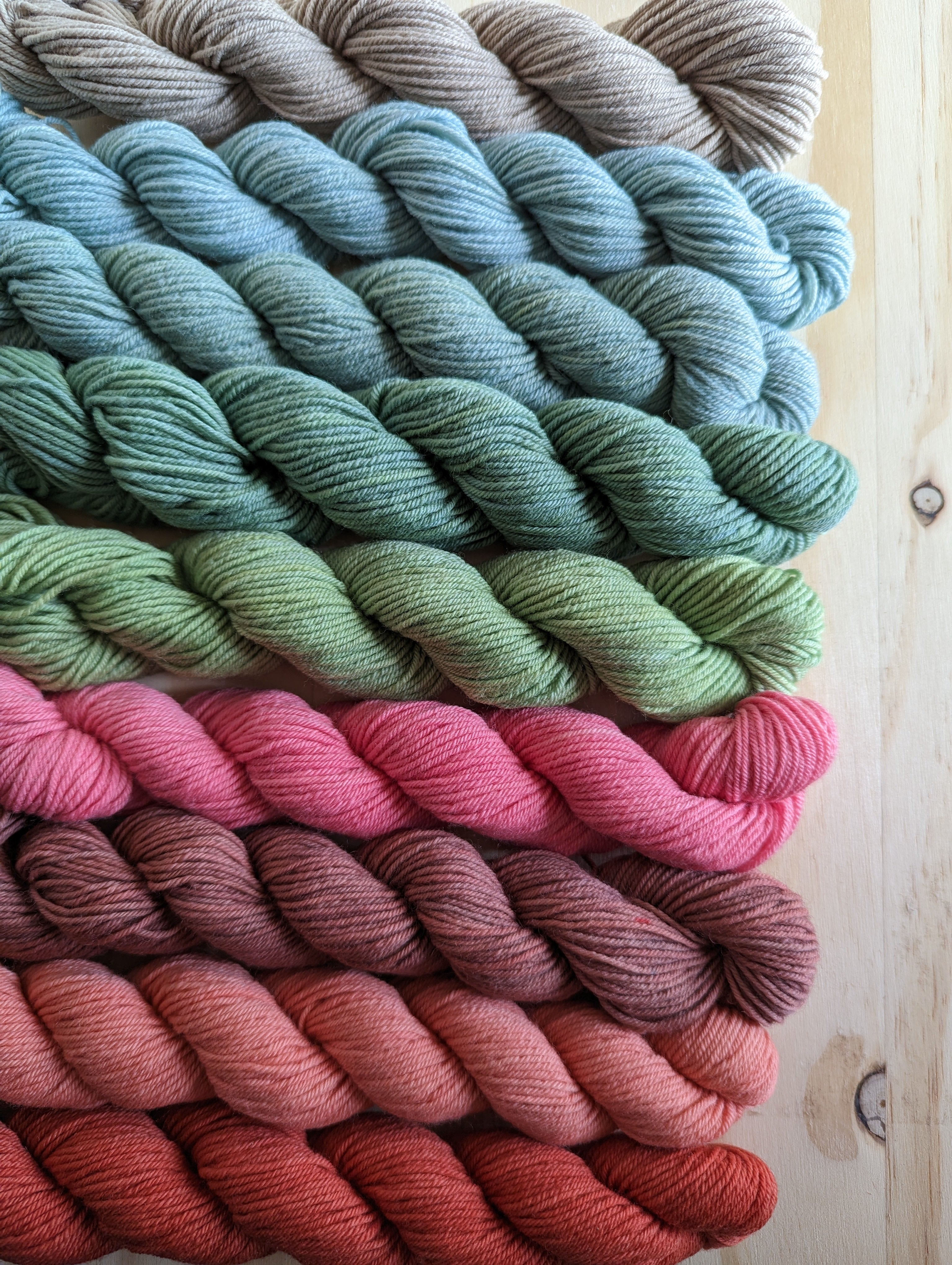
I needed quite a lot of dark crimson pink Cherry Coloured Twist sock weight yarn for the new pattern by Ysolda Teague being launched in the next issue of Twist Collective , so I started with a strong cochineal dye bath. As I need a lot of the dark pink I wanted my first exhaust to be as dark as the original dye bath.... moreMedieval Purses
Vivi alias Suis Le Fil of the Champagne region of France has been very busy over the summer combining her love of all things medieval and her knitting skills.
The Medieval drawstring bags below have been created using Renaissance Dyeing Sock-weight 4-ply wool.
Fortunately we don't have to attend the French Madieval Faires to buy one as Vivi also has an Etsy Shop.
You can also view her blog and follow the stories behind her creations.... moreFord Green Hall
The Threaders of Ford Green Hall are a small group of dedicated and enthusiastic embroiderers who meet every Monday at Ford Green Hall, Stoke-on-Trent. They spend many busy hours embroidering replica bed hangings, door hangings, pillows, bed spreads and more to be displayed in this charming 17th century farmhouse. {p} The project leader is Pauline Mountain, she explains how the long curtain took six years to finish, starting with eight people around the big frame but falling to five due to three of the older members dying. The original design is in the V & A and is shown on the cover of one of their books on design.... more
Onion Skins
The humble onion skin can be very versitile when it comes to natural dyeing, producing with a good alum mordant and modifiers a wide range of yellows, oranges and browns.
Living in France, it is easy to collect onion skins with the help of my neighbours, I have a good supply of organic onion skins to keep me going all year round. I just keep them in a paper sack in a dry place until needed.
I have heard it said that if the onion skins are kept too long they don't dye so well, but I haven't noticed that much even when using old onion skins.... moreLogwood and Persian Berry Extracts
Here is a little project using just two natural dye extracts: Logwood and Persian Berries and the 100g of Australian pre-mordanted merino wool, from the Felters and Spinners Kit .
Purple and yellow are complimentary colours so you can't go much wrong really and the different tones and shades naturally produced by natural dyes bring variety and originality.
The bag was first felted and washed, a little local mica and silk gauze were incorporated into the felt to give texture. The bag was then printed with a pattern using the two dyes mixed with a little gum tragacanth. At the same time the remaining pre-mordanted tops and a little silk thread were painted with different variations of the two dyes and all were fixed by steaming. The tops were spun into embroidery thread and plyed to give strength and many different variations of shade. Some was Navajo plyed which later lead to interesting stitch form and texture.... moreSale of Large 125g Hanks
After a couple of long dyeing sessions there are always the inevitable shades that don't match up to the colours on the range. Sometimes these can be re-dyed but often the colours are so nice it seems a pity not to offer them to you at a reduced price.
There are now a few new shades up on the sales page, some of which are a result of the reaction between the ph of the local water and the logwood dye.
Logwood has a very narrow ph window in which it gives a good blue purple, shift the ph too far one way and the blue disappears. Shift it even further and all the dye spectrum disappears! I've learned not to do that but it was fun experimenting. The Aubergine shade below is just a little too red.... more